
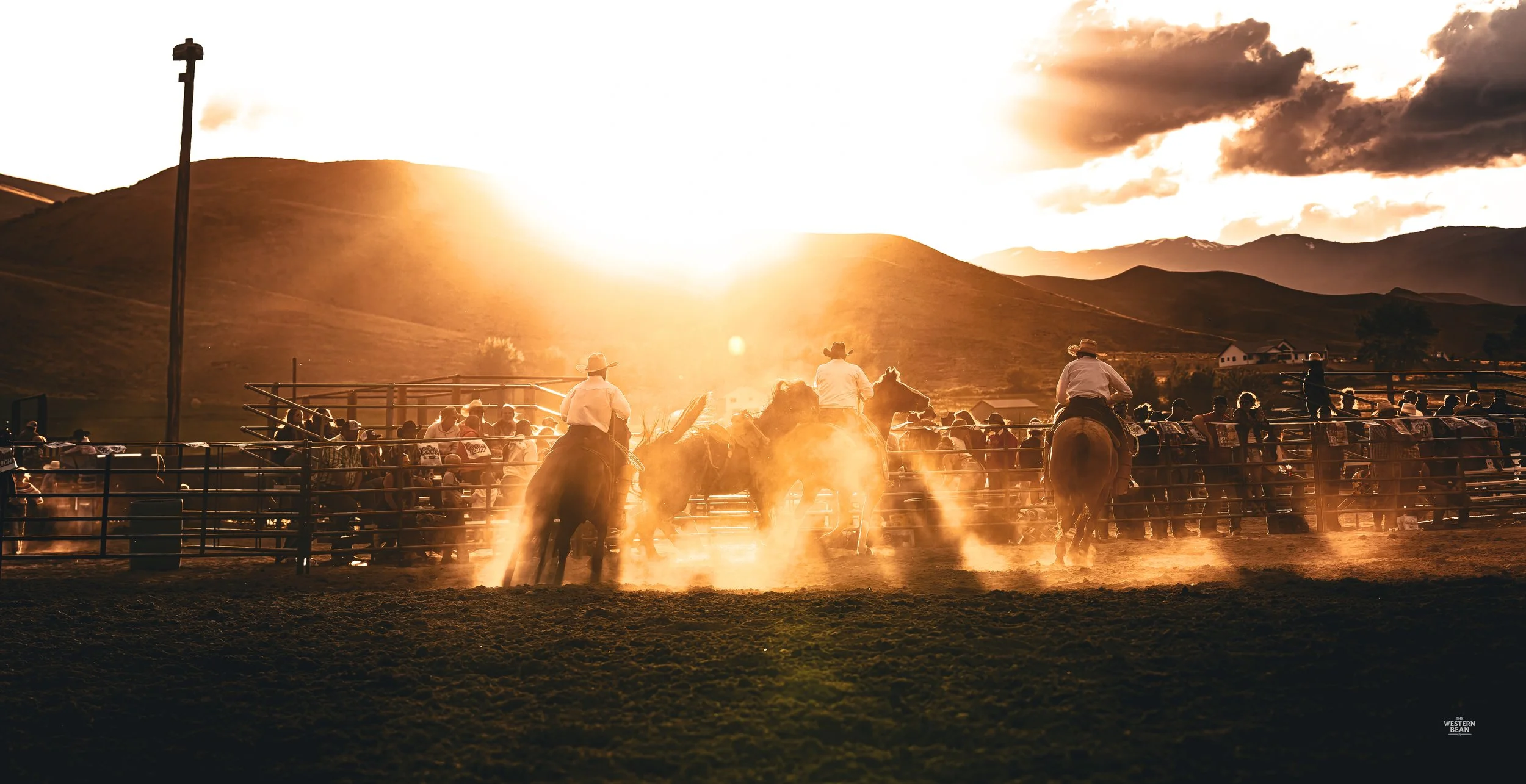
Spank Martiny Memorial Broncs and Bulls - Challis, Idaho
Two weeks ago, I returned to where this journey began — back to the rodeo I'd first gone to a year ago simply for the enjoyment of it, before any of this started. The drive from Idaho Falls to Challis gave me plenty of time to reflect on how far things have come since then. It's been quite a ride, and I'm excited about what lies ahead. I'll be honest: I'm not entirely sure where these Field Notes will go yet.
I arrived earlier in the day and spent some time wandering around Challis, a little too late for the festivities before the rodeo. It reminded me of one of my favorite things about small towns and the countryside — life feels slower out here, and it's worth taking the time to enjoy things as they come, since the rest of the time it all seems to move too fast. I checked out the fishing in town, and to my amusement, found a couple of kids taunting a blue heron with a fish they'd caught.
Of all the rodeos I went to last year, the Spank Martiny Memorial was one of my favorites. It was the first one I ever attended, and I'd been talking it up — to friends and in my own head — enough that I worried I'd built it into something it wasn't. I was glad to find I hadn't. Growing up in Eastern Idaho, surrounded by all of this, I'd somehow never been to a rodeo before that night, so this time I came back knowing a little more about what I was watching.
The evening was one to remember — the action, the people I got to meet, the images I came away with. I'm really happy with how it all turned out. The afterparty was something too: the food and the music were excellent, and the sunset made a fine close to a great day.
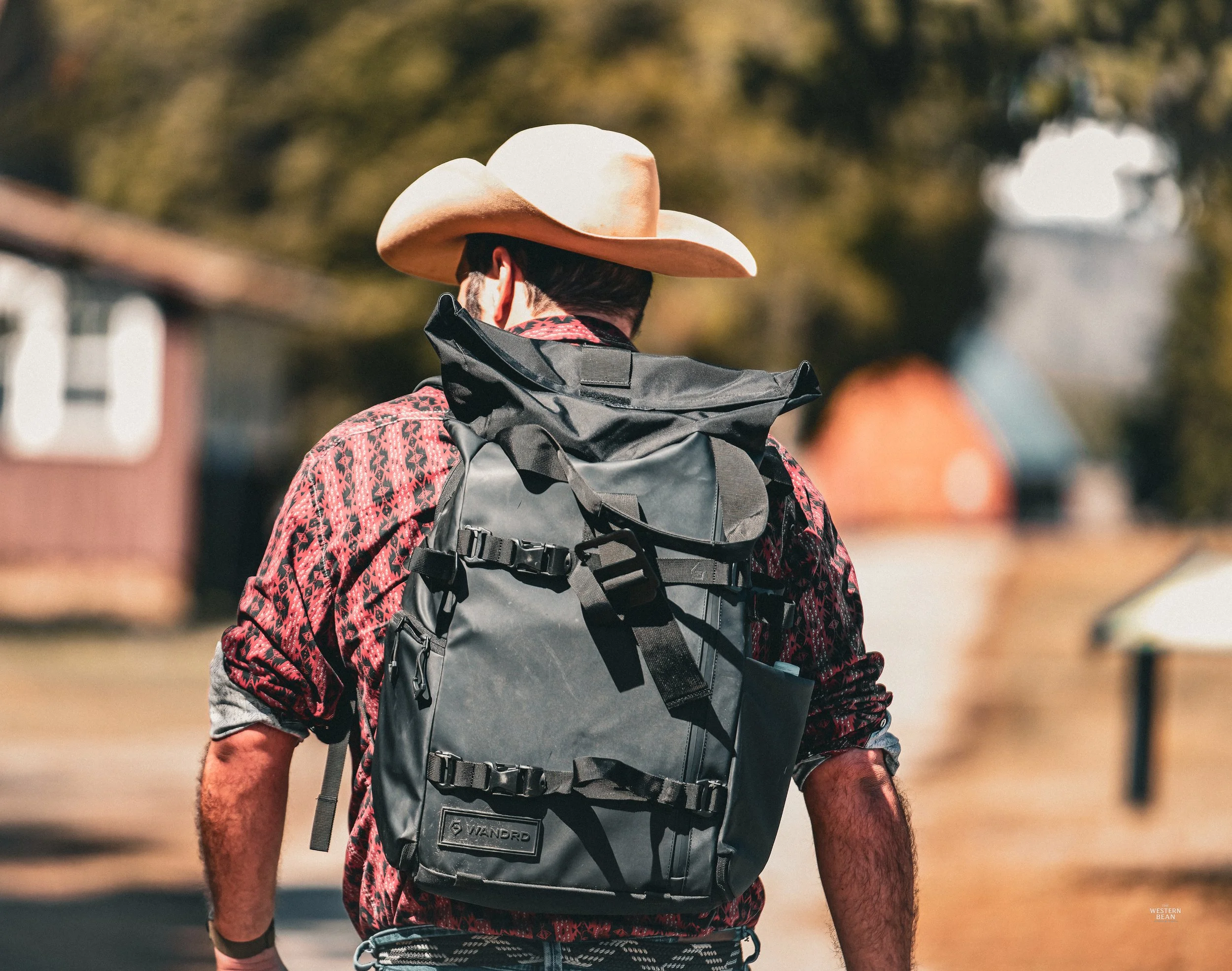
At the Gate
It started with a ranch in the mountains above Leadore, Idaho—and a realization that came years too late.
Growing up, my grandfather had a cattle ranch in the mountains above Leadore, Idaho. As kids, it was about as close to paradise as we knew. My parents would sometimes give my brothers and me the choice between going to Lagoon or heading to the ranch—we chose the ranch every time.
When I was ten, my grandfather passed away in a tractor accident. At the time, I didn’t fully understand what I lost. Looking back now, I realize how much I missed—the chance to really know him, to learn from him, and to be part of that life.
About a year ago, I bought my first professional camera without knowing where it would take me. Before that, most of what I shot was landscape work with a drone. The first rodeo I brought a camera to was the Spanky Martini Memorial Broncs & Bulls, and I’d never had that much fun shooting anything before. That’s when something started to click.
At the time, I was working a 10-days-on, 4-days-off schedule, so I started showing up to whatever local rodeos I could. I ended up shooting several across Eastern Idaho, along with Harriman Ranching Days at Harriman State Park. Somewhere along the way, the direction started to take shape.
Then, the day after Thanksgiving, I got injured and ended up laid up for two months. Once I got past the worst of it, I had time to think. That’s when everything came together.
I kept coming back to my grandfather, the ranch, and the people behind the work I’d been photographing. I realized I don’t just want to be another photographer people call when they need pictures—though that’s part of it.
I want to build something that tells stories.
Not just rodeo, but the western and agricultural way of life—the people who show up day in and day out, doing the work whether anyone notices or not.
Right now, 39% of farmers and ranchers are over 65, another 39% are between 45 and 65, and only 22% are under 35. Those stories won’t be around forever.
I want to do my part to keep them alive.
That’s what People of the West is about—real people, real work, real stories.
If you’ve got a story to tell, or you want photos that mean something, let’s make it happen.